October 6, 2026
Why Argon Filled Windows Improve Home Energy Efficiency
By @muldkr35w0
If you have ever stood near a window on a cold morning and felt a draft, you know how much heat can escape through a single pane of glass. Most people assume that upgrading to double-pane windows solves the problem, and it does help. But what really makes a difference is the gas that sits between those panes. That is where argon filled windows come into the picture.
Argon is a colorless, odorless gas that is denser than air. When it is sealed between two panes of glass, it slows down the transfer of heat. That means your home stays warmer in the winter and cooler in the summer. It is a simple concept, but the practical benefits go beyond just comfort. Lower energy bills, reduced condensation, and less strain on your HVAC system all follow from this one upgrade.
How Argon Gas Works in a Window
To understand why argon is used, it helps to know a little about how heat moves. Heat travels through three mechanisms: conduction, convection, and radiation. Air is actually a decent insulator, but it also allows convection. When air warms up next to a cold window, it rises and cooler air takes its place, creating a continuous loop that carries heat away from the room. Argon, being heavier than air, moves more slowly. That reduces convection inside the sealed unit. Less movement means less heat transfer.
Argon also has a lower thermal conductivity than air. That means it simply does not conduct heat as easily. Put those two properties together, and you get a window unit that performs significantly better than one filled with plain dry air. The industry standard for measuring this is the U-factor, which tells you how much heat passes through the window. A lower U-factor means better insulation. Argon filled windows typically achieve a U-factor that is 10 to 20 percent better than air-filled units.
Connect with us on Instagram.
What About Krypton?
You may have heard of krypton gas as an alternative. Krypton is even denser than argon and offers slightly better insulation. But it is also more expensive. For most residential applications, argon provides the best balance of performance and cost. Some high-end windows use a mix of both gases. But if you are looking at standard replacement windows or new construction, argon is the most common choice. It works well with standard double-pane construction and does not require special spacers or coatings to be effective.

Real-World Performance and Practical Trade-Offs
I have worked on enough window replacements to know that the numbers on a spec sheet do not always tell the whole story. U-factor and R-value are useful, but they are measured under laboratory conditions. In a real house, the performance of argon filled windows depends heavily on the quality of the seal. If the seal fails and the gas leaks out, you are left with a double-pane window that contains ordinary air. The insulation value drops back to baseline.
That is why the manufacturing quality matters. A reputable window manufacturer uses a durable spacer system and a proper sealant to keep the gas inside. The industry standard for gas retention is that a window should retain at least 90 percent of its argon after 20 years. But not all windows meet that standard. When you are shopping for replacement windows, ask about the gas retention warranty. A good one will cover the seal and the gas fill for at least 10 to 15 years.
Another thing to consider is the climate you live in. Argon filled windows are most beneficial in colder climates where heating costs dominate. In mild climates, the savings may be smaller. But in a place like North Texas, where summers are brutal and winters can be chilly, the year-round benefit is real. The gas slows heat loss in winter and helps keep the heat out in summer, especially when combined with low-emissivity (low-E) glass coatings.
Low-E Coatings and Argon: A Natural Pair
Low-E coatings are microscopically thin layers of metal oxide applied to the glass. They reflect infrared heat while letting visible light pass through. On their own, they are effective. But when you pair a low-E coating with argon filled windows, the overall performance improves noticeably. The coating handles the radiative heat transfer, while the argon handles the convective and conductive transfer. Together, they create a window that performs far better than either feature alone.
For example, a standard double-pane window with clear glass and air fill might have a U-factor around 0.50. Add a low-E coating and argon fill, and that number can drop to 0.30 or lower. That is a big difference. It translates directly into lower heating and cooling loads. In some cases, homeowners see a 15 to 20 percent reduction in their energy bills after upgrading from single-pane or older double-pane windows.
Signs Your Current Windows Might Be Underperforming
Not everyone needs to replace all their windows at once. But if you notice any of these signs, it is worth looking into an upgrade:
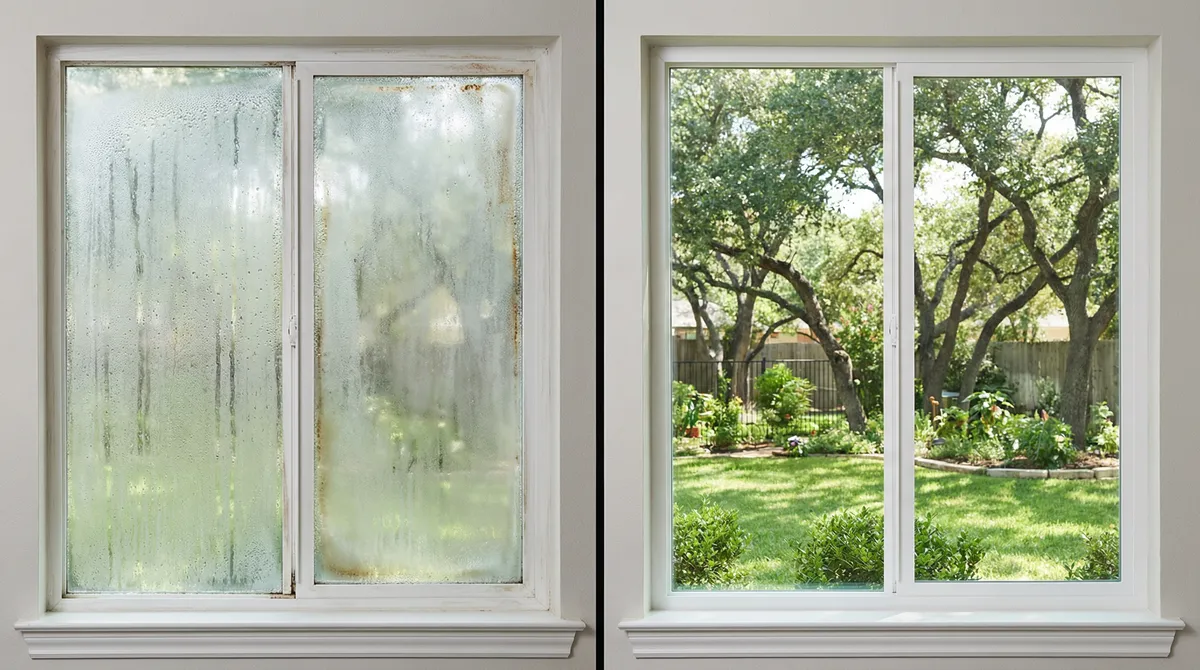
- Fogging or condensation between the panes. That indicates a failed seal and lost gas.
- Drafts or noticeable temperature differences near the windows, even when closed.
- High energy bills that keep climbing despite adjusting your thermostat.
- Visible damage like cracked glass or rotting frames around the window.
If your windows are more than 15 years old, there is a good chance they were built before argon fills became common. Older double-pane units often used dry air or even a partial vacuum that has since degraded. Replacing them with modern argon filled windows can make a noticeable difference in comfort and energy use.
Installation Matters as Much as the Window Itself
Even the best window will underperform if it is installed poorly. Gaps around the frame, missing insulation, and improper flashing all allow air and moisture to bypass the window. The gas inside the panes cannot compensate for a leaky installation. That is why it is important to work with a contractor who understands proper window installation techniques. A good installer will check for squareness, level the frame, and seal all the edges with appropriate materials. They will also make sure the window is properly supported so the seals do not get stressed over time.
If you are considering a whole-home replacement, it is worth getting multiple estimates and asking each contractor how they handle the installation details. The lowest price might not include proper sealing or flashing. Spending a little more upfront on quality installation will pay off in the long run.
Maintenance and Longevity
Once you have argon filled windows installed, they require very little maintenance. The gas is sealed inside and does not need to be topped off. The main thing to watch for is the condition of the seals. If you notice fogging between the panes, that means the seal has failed and the gas has escaped. At that point, the window cannot be repaired easily. The entire insulated glass unit usually needs to be replaced. Some companies offer a seal failure warranty that covers the cost of a new unit. That is worth looking for when you buy.
Another thing to keep in mind is that argon is not harmful. If a seal does fail, the gas simply dissipates into the air. It is non-toxic and does not pose any health risk. The only downside is the loss of insulation performance.
Is It Worth the Investment?
For most homeowners, yes. The added cost of argon fill over standard air fill is relatively small, typically adding 5 to 10 percent to the price of the window. The energy savings usually recover that difference within a few years. And the comfort improvement is immediate. Rooms feel more even in temperature, and you can sit near a window without feeling a chill. If you are building a new home or replacing all the windows in an existing one, argon filled windows are a smart upgrade.

For those on a tighter budget, you can prioritize the rooms that benefit most. Bedrooms, living rooms, and any room with large windows will see the biggest improvement. You can always replace the rest later.
If you are in the DFW area and considering an upgrade, it is worth talking to a local specialist who understands the climate and building codes. Apex Windows & Glass, located at 7200 W University Dr, McKinney, TX 75071, +1 214-263-3008, is a DFW-based window and glass replacement company specializing in foggy glass repair, commercial glass services, and whole-home window replacements with warranties and free estimates. They can help you evaluate your current windows and recommend the right solution for your home.
❧